
No products in the cart.
How to Switch Your Cat to a New Food Safely
Changing your cat’s diet may seem simple, but switching foods too quickly can cause digestive problems such as vomiting, diarrhea, or a loss of appetite. Whether you’re introducing a new brand, moving from kitten food to adult food, or changing formulas for health reasons, it’s important to make the transition gradually.
This guide explains how to switch cat food safely while helping your cat adjust comfortably to its new diet.
Why You Should Switch Cat Food Gradually
Cats have sensitive digestive systems and can be cautious about new foods. A gradual transition gives their stomach time to adapt while reducing the chances of digestive upset.
Benefits of switching slowly include:
- Less risk of vomiting or diarrhea
- Better acceptance of the new food
- Reduced stress during feeding
- Easier adjustment to new flavors and textures
When Should You Switch Your Cat’s Food?
There are several reasons to change your cat’s diet:
- Transitioning from kitten food to adult food
- Moving to senior cat food
- Addressing food allergies or sensitivities
- Supporting weight management
- Following your veterinarian’s recommendation
- Upgrading to a higher-quality food
Always choose a nutritionally complete food that matches your cat’s age and lifestyle.
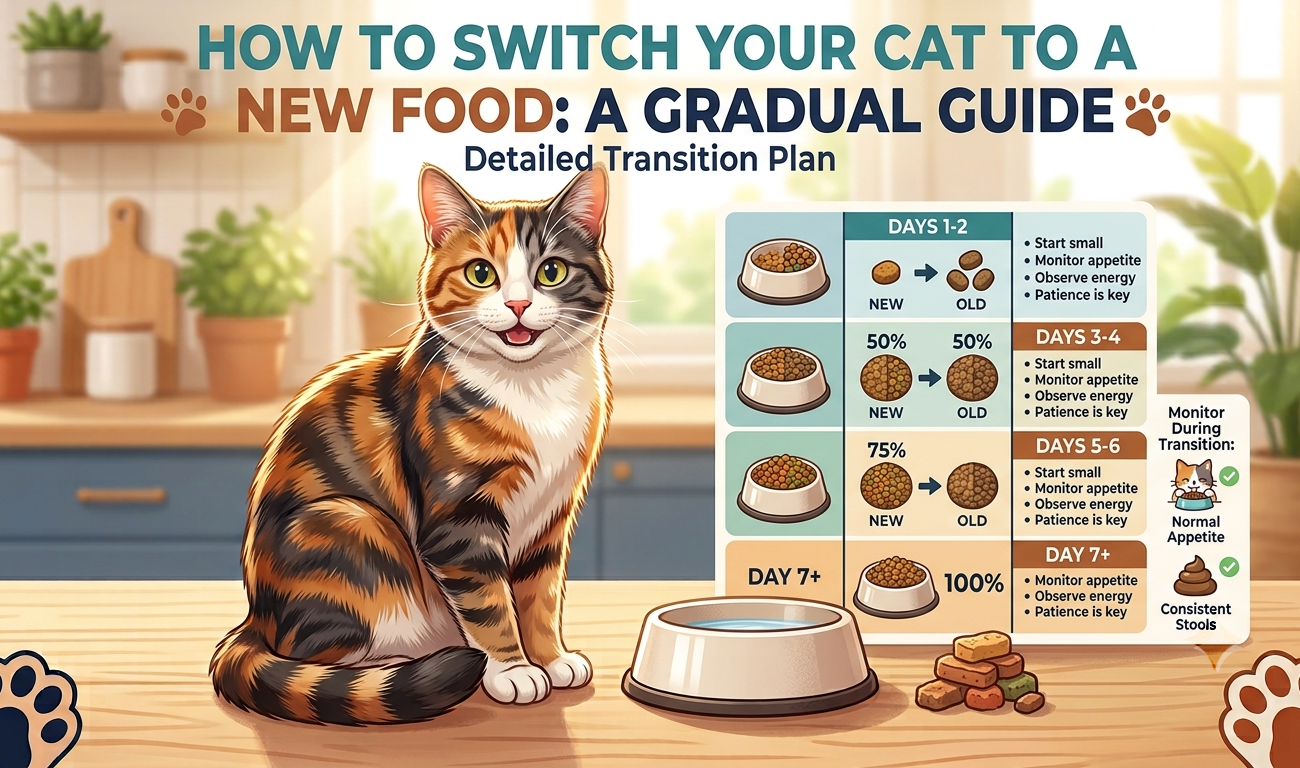
The 7-Day Cat Food Transition Schedule
The safest way to switch cat food is by mixing the old and new foods over several days.
| Day | Old Food | New Food |
|---|---|---|
| 1–2 | 75% | 25% |
| 3–4 | 50% | 50% |
| 5–6 | 25% | 75% |
| 7 | 0% | 100% |
If your cat has a sensitive stomach, extend the transition to 10–14 days.
Monitor Your Cat During the Transition
Watch for positive signs such as:
- Healthy appetite
- Normal stools
- Good energy levels
- Comfortable digestion
- Regular water intake
A smooth transition usually means your cat is adapting well.
Signs the New Food May Not Be Suitable
Contact your veterinarian if your cat experiences:
- Persistent vomiting
- Ongoing diarrhea
- Refusal to eat for more than 24 hours
- Severe lethargy
- Significant weight loss
Some digestive changes can occur during the first few days, but persistent symptoms should be evaluated.
Tips for Picky Eaters
Some cats resist dietary changes. These tips can help:
- Mix the foods thoroughly.
- Serve meals at consistent times.
- Warm wet food slightly to enhance aroma.
- Avoid changing multiple things at once.
- Be patient and avoid forcing your cat to eat.
Most cats accept the new food once the transition is gradual.
Switching Between Wet and Dry Food
If you’re changing from wet to dry food or vice versa:
- Introduce the new texture slowly.
- Ensure fresh water is always available.
- Follow the same gradual mixing schedule.
- Monitor your cat’s appetite and digestion.
Many owners successfully feed a combination of wet and dry food.
Transitioning Kittens to Adult Cat Food
Kittens usually move to adult food around 12 months of age (breed and health can affect timing). Make the switch gradually using the same transition schedule.
Choose an adult formula that provides complete and balanced nutrition.
Choosing a High-Quality Cat Food
When selecting a new food, look for:
- Real animal protein as the first ingredient
- Complete and balanced nutrition
- Essential vitamins and minerals
- Taurine for heart and eye health
- Age-appropriate formulas
- Trusted brands with consistent quality
Why Choose Meow Fresh Cat Food?
If you’re switching to Meow Fresh Cat Food, a gradual introduction helps your cat adjust to its new diet.
Meow Fresh offers balanced formulas for:
- Kittens
- Adult cats
- Persian cats
Each recipe is made to support healthy digestion, strong muscles, a shiny coat, and everyday vitality.
Frequently Asked Questions
How long should I take to switch my cat’s food?
Most cats adjust within 7 days, but cats with sensitive stomachs may need 10–14 days.
Can I switch cat food overnight?
No. Sudden changes increase the risk of digestive upset and food refusal.
What if my cat refuses the new food?
Slow the transition, mix the foods more thoroughly, and offer meals at regular times. If refusal continues for more than 24 hours, consult your veterinarian.
Is diarrhea normal after changing cat food?
Mild digestive changes can happen during a transition, but persistent diarrhea is not normal and should be assessed by a veterinarian.
Conclusion
Learning how to switch cat food properly helps protect your cat’s digestive health and makes the transition much easier. By introducing the new food gradually over a week, monitoring your cat’s response, and choosing a nutritionally complete diet, you can minimize digestive upset and encourage a smooth adjustment.
Whether you’re moving from kitten food to adult food or trying a new formula like Meow Fresh Cat Food, patience and a gradual approach are the keys to success.
Shop Pet Food from our store, PawsAdventure
